
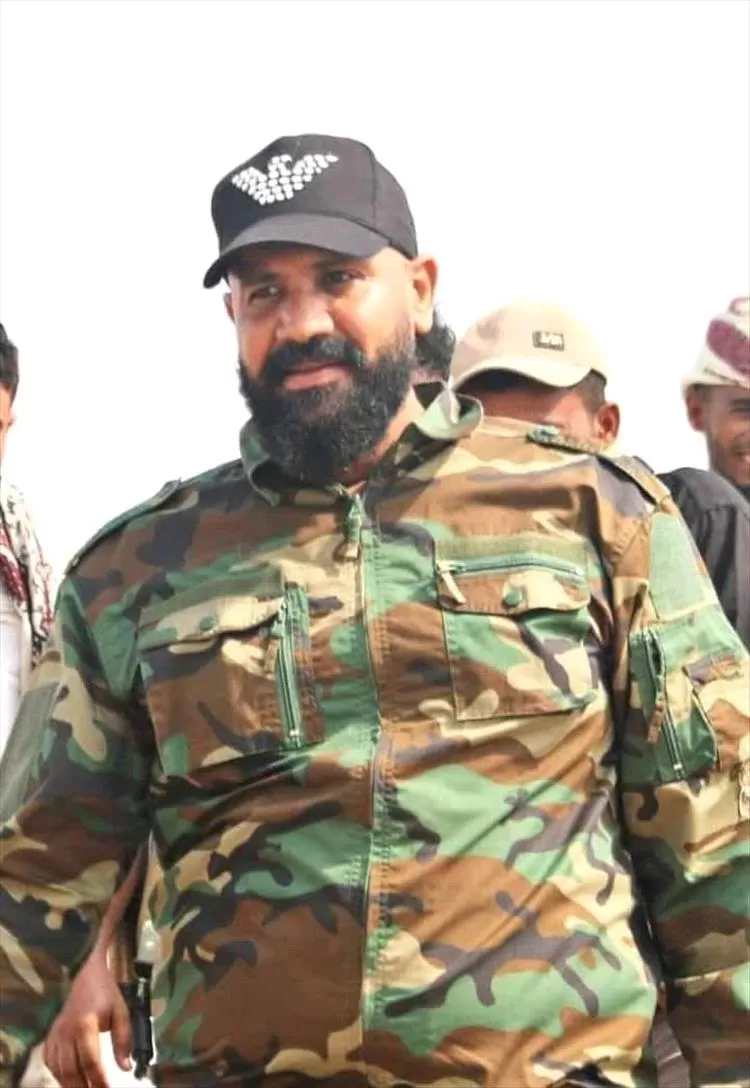
The leader of the Tihami resistance: It is the right of Tihama to be a true partner in decision-making, not just an implementing force.
Arabian Sea - Exclusive
Special / Al Hudaydah Interviewed by / Nashwan Suleiman In light of an intertwined reality between the complexities of the military scene and the confusion of the political map in the Tihami coast, the Tihami Resistance emerges as one of the most prominent field actors, who still adhere to the option of liberation and restoring the Tihami decision away from marginalization and guardianship. With the growing talk about new arrangements on the ground, and the continuing debate about Tihami representation in the various military formations, "Aden Al-Ghad" website conducted a special interview with the General Commander of the Tihami Resistance, during which he revealed a clear vision for the future of Tihama, and defined the resistance's position on alliances, and on the internal and external challenges facing the people of Tihama. ■ Initially, how do you assess the general scene in The Tihami coast in light of the recent military and political developments? ● The scene on the Tihami coast is going through a pivotal stage. There is an overlap in the political and military files and a direct impact of regional and national equations on the Tihami interior. Despite the complexities, the people of Tihama are still steadfast in their just demands to liberate their land and redress their cause. ■. How was the Tihami Resistance formed? .● The Tihami Resistance was formed from the first moment of the Houthi coup and their control of Al Hudaydah Governorate as a direct reaction. At a time when the responsible parties abandoned their duty to defend the governorate, the movement began by forming a resistance from the heart of the city and we fought direct confrontations before moving to implement more precise and effective qualitative operations. With the development of the situation, we received directives to go to Aden in order to rearrange ranks, train and mobilize in preparation for the battle of liberation. The efforts resulted in the liberation of the strategic Tihami islands, in addition to regaining large areas of the coast until we reached the outskirts of the city of Al Hudaydah. ■ How do you view the withdrawal of the Tihami Resistance forces from Al Hudaydah under the Stockholm Agreement? ● We consider it a forced withdrawal imposed by an external will, and it was not a Tihami decision. The Tihamis were not consulted and today they are paying the price from their security and livelihood. On the day of the withdrawal, the Tihami Resistance was the last to leave the field, as it confronted a dangerous Houthi attempt to control the rest of the areas until reaching Bab al-Mandab, and at that moment the best of our heroes rose, led by the martyr leader Haitham Bari, which confirms that Tihama paid heavy prices to protect the coast. We demand a review of the agreement in a way that guarantees the interests of the residents of Al Hudaydah. ■ What is your assessment of the extent of the United Nations' commitment to implementing the Stockholm Agreement? ● Unfortunately, the Stockholm Agreement was not implemented in its content and its provisions were not adhered to by the Houthi party in the absence of effective monitoring mechanisms from the United Nations. As for Tihama, it has been left without a real international protection umbrella, and this is what doubles the suffering of its people. ■ How did the withdrawal of the joint forces from the city of Al Hudaydah affect the humanitarian situation in the areas under Houthi control? ● The withdrawal exacerbated the humanitarian situation, as the Houthi group exploited it to strengthen its security and military grip on civilians, which led to more violations, restrictions, restricted access to aid, and an increase in cases of repression and arrest. ■ How do you view the presence of Brigadier General Tariq Saleh on the Tihami coast? Does it pose an obstacle to the Tihami Resistance? ●We in the Tihami Resistance focus on our goal of empowering the people of Tihama and restoring their rights, and the presence of Brigadier General Tariq Saleh on the coast comes in the context of a complex reality imposed by the war. We are not in conflict with anyone, but we believe that any presence that does not respect the will of the Tihamis and their right to manage their areas will not be a factor of stability. There is nothing that prevents the people of Tihama from playing their full role in confronting the criminal Houthi project, but completing this role requires independent support that enhances the capabilities of the Tihami Resistance and enables it to perform its national duty within a clear vision and a balanced partnership that respects the sacrifices and does not go beyond the people of the land. ■ What is the reason for your rejection of Tariq Afash's presence and hegemony on the Tihami coast? ●Our position expresses our adherence to the rights of Tihama and the dignity of its people, and it is a national position that cannot be measured by a price. Our goal is a real partnership based on mutual respect and strengthens the unity and strength of Tihama away from any pressure or personal interests. ■ How do you explain the joining of some Tihami brigades to the ranks of Tariq Saleh? ●The joining of a number of Tihami brigades came in light of field conditions that do not necessarily reflect their full will. We trust that their true loyalty is to their land and their cause, and what we hope is that these sacrifices will be respected and the people of Tihama will be granted their natural right to manage their affairs and represent themselves in a manner befitting their history of struggle. ■ Many people raise questions about the nature of Tihami representation within the military formations affiliated with Tariq Saleh. What is your comment? ●We respect all the efforts made in the context of confronting the Houthi militias, but it is natural for the people of Tihama to raise their questions about the level of their representation within the national resistance. Tihama has offered its men and blood, and it has the right to be a real partner in the decision, not just an executive force. We affirm that the demands of the Tihamis for representation and leadership are not directed to a specific formation or force, but rather a general call to ensure justice and partnership on all fronts. ■ Are there red lines regarding coordination or integration with the leadership of Tariq Saleh? ●The red lines for us are respecting the rights of the people of Tihama, their true representation, and preserving their dignity and their leading role in all forms of coordination or integration. We believe that cooperation must be based on equal partnership and mutual respect. ■What is your message to the Tihami leaders who have joined Tariq Afash? ●We have appreciation for all the Tihami leaders wherever they are, and we believe that their affiliation with Tihama and its cause does not change with changing positions. What we hope is that their voice will remain present in defending the rights of the people of Tihama and their fair representation within any formation, and that their presence will not be used to marginalize the Tihamis or go beyond their aspirations. The stage requires awareness and responsibility, and we trust that every free Tihami realizes the magnitude of the responsibility placed on his shoulders. ■ What is your vision for unifying the Tihami ranks politically and militarily? And how is it translated into practice? ●Unifying the Tihami ranks is a necessity, not a luxury. We are working to build a comprehensive national umbrella that clearly represents all the Tihami components, and there are serious dialogues in this direction. We believe that the future must be shaped by purely Tihami hands. ■ What is the nature of the relationship between the Tihami Resistance and the Tihami Movement today? The relationship between the Tihami Movement and the Tihami Resistance is a complementary and harmonious relationship. The resistance represents the defensive arm of the movement, and the movement is the political framework for the resistance. We also do not forget that the resistance was born from the womb of the Tihami Movement and derived its legitimacy and spirit from it. ■Are there attempts to weaken the Tihami voice? ● Yes, there are attempts to contain or marginalize the Tihami voice, whether by ignoring it or by forced assimilation. But we are betting on the awareness of our people and on the cohesion of the Tihami elites in the face of these attempts. ■ What is the most appropriate system for Tihama within the Yemeni state? ●We are with a fair federal Yemen, based on partnership, not hegemony. We believe in federalism as a realistic option that guarantees Tihama's right to manage its resources, security and development. ■ In light of the absence of the state from the liberated directorates, what can be done to provide services? ●In light of the absence of the state and the weakness of services, we realize that the local authority, led by the governor, is working in complex conditions resulting from a major shortcoming towards the liberated directorates. We in the Tihami Resistance seek to integrate with their efforts and support them by supporting the activation of the role of local councils and contributing to strengthening security and strengthening infrastructure in a way that preserves the dignity of the Tihami citizen and alleviates his suffering. ■ What is required of the people of Tihama now? ● What is required is to unite ranks and not be drawn behind any polarization. This is a stage of awareness and construction, and every Tihami must realize that the fate of the region is being shaped now, so let him be part of the action, not the victim. ■. If a comprehensive settlement is imposed without empowering Tihama, will you accept it? ●We will not accept a settlement that excludes Tihama or returns it to the square of marginal