

"Sejjil" missile: First practical use and strategic escalation
"Sejjil" missile: First practical use and strategic escalation
Arabian Sea - Exclusive
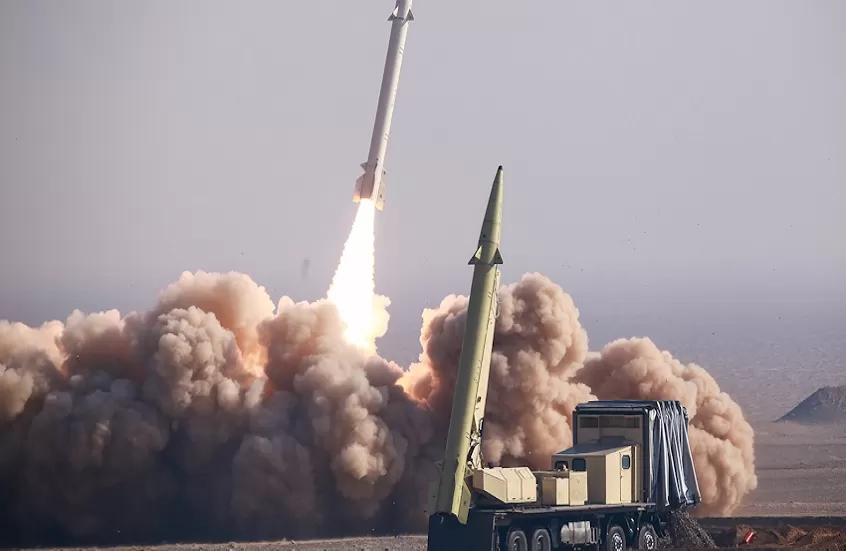
The announcement by the Iranian Revolutionary Guard about using the Sejjil missile in missile strikes for the first time has sparked a wave of analyses about the quality of this missile and its military dimensions. The "Sejjil" is considered one of the most dangerous ballistic missiles in Iran's arsenal, and it has significant strategic implications if it enters the actual confrontation arena with Israel or any regional adversary. ⸻ What is the "Sejjil" missile? • The Sejjil is a medium- to long-range ballistic missile produced by Iranian defense industries. • It is characterized by its use of solid fuel, which distinguishes it from many other Iranian missiles that use liquid fuel, such as the "Shahab." • The name "Sejjil" is taken from the Holy Quran and means "stones of baked clay," in a symbolic reference to devastating strikes. ⸻ Technical characteristics of the missile: • The range is between 2,000 to 2,500 kilometers, making it capable of hitting targets deep inside Israel, and even beyond. • The missile consists of two stages that operate on solid fuel, which means faster launch and higher combat readiness. • It can be launched from mobile platforms, making it difficult to detect in advance or destroy before launch. • The missile's speed is more than Mach 5 (i.e., more than 5 times the speed of sound), which puts it in the hypersonic missile category. • Its warhead is believed to weigh between 500 to 650 kilograms and can carry highly explosive materials. ⸻ Why is its use a dangerous development? • It is being used for the first time in the field of military operations, which indicates an Iranian shift from deterrence to direct threat. • This type of missile is considered strategic rather than tactical, meaning it is intended to strike large, distant, or protected targets. • It represents an advanced step in demonstrating Iranian missile capabilities that were, to some extent, limited to experiments or maneuvers. ⸻ The difference from other missiles such as "Shahab": • "Shahab" uses liquid fuel and requires a longer preparation time, while "Sejjil" is ready for launch within minutes. • "Sejjil" is more accurate and powerful in terms of payload and speed, making it more difficult to intercept by air defense systems. ⸻ Regional and international significance: • The message is directed to Israel: that Iran has the ability to strike any point in its territory with a high-speed and accurate missile. • An indirect threat to US bases in the region, which are within the range of Sejjil. • Highlighting Iran's ability to manufacture missiles entirely domestically, without relying on foreign countries, despite sanctions. ⸻ Conclusion: The introduction of the "Sejjil" missile into the battle constitutes a qualitative leap in Iranian deterrence tools, and a message that Tehran will not be satisfied with short-range missiles or drones. It is a transformation that carries indications of escalation that may change the equation of deterrence in the Middle East.