

America and the Test of Democracy Between Challenges and Division
America and the Test of Democracy Between Challenges and Division
Arabian Sea - Exclusive
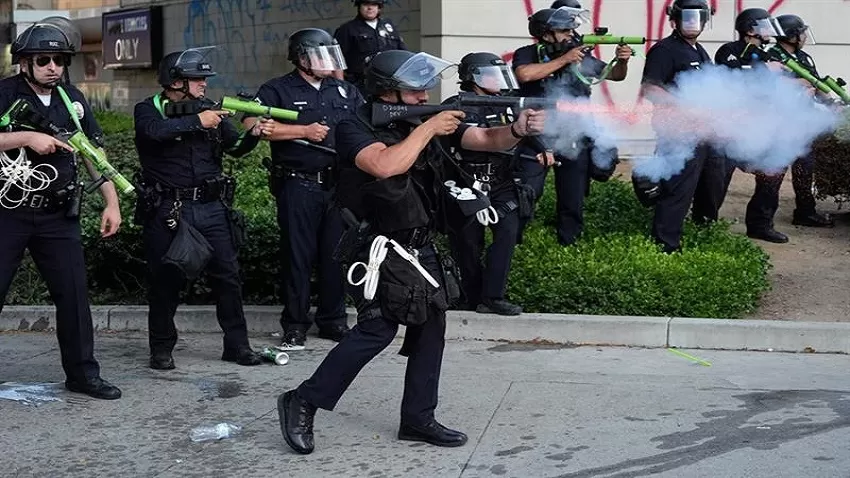
Arab Sea Newspaper – Los Angeles June 11, 2025 Amid the hustle and bustle of the streets and the conflict of institutions, the United States is currently experiencing one of the most difficult tests of its democracy. Los Angeles, a city long known for its diversity and openness, has become an open stage for protests, following a wave of violent raids carried out by immigration authorities, which sparked widespread public anger. In a scene reflecting the depth of political and social division, thousands took to the streets, chanting slogans demanding social justice, rejecting the "politicization of security," and denouncing what they described as "institutional racism" in law enforcement. Curfew... and Anxiety Escalates The authorities responded quickly by imposing a nightly curfew in vital areas of the city center, supported by a heavy security presence, and even the summoning of National Guard units. This step, although ostensibly to protect public safety, has increased tension and raised concerns among civil rights advocates, who see it as a blatant threat to freedom of expression and demonstration. Federal Intervention Increases Division Adding fuel to the fire is the direct federal intervention by order of the President, who described the demonstrations as "unacceptable chaos" and threatened to "restore order by force." In response, the Governor of California attacked these statements, considering them a "political exploitation of the crisis," stressing that what is happening is "nothing but an expression of legitimate public anger that must be listened to, not suppressed." Democracy Under the Microscope American democracy is experiencing unprecedented pressure today: • Escalation of protests • Breakdown of trust between citizens and the state • Repeated use of force against peaceful protesters • Division between federal and local authorities All these elements put the principles of American democracy to the test, amid real questions: Is democracy still able to absorb crises? Or is it collapsing under the weight of polarization and political violence? What's Next? The street has not calmed down, the tension is still ongoing, and the authorities face two options: 1. Continuing on the security and military path 2. Or opening up to a broad national dialogue that restores confidence and establishes a new phase of reform. What is happening today in Los Angeles is not just a local protest, but a prominent sign in the path of American democracy. It will either prove its ability to renew and recover, or enter a turning point that may reshape its political identity for decades to come.